


 Tiếng Việt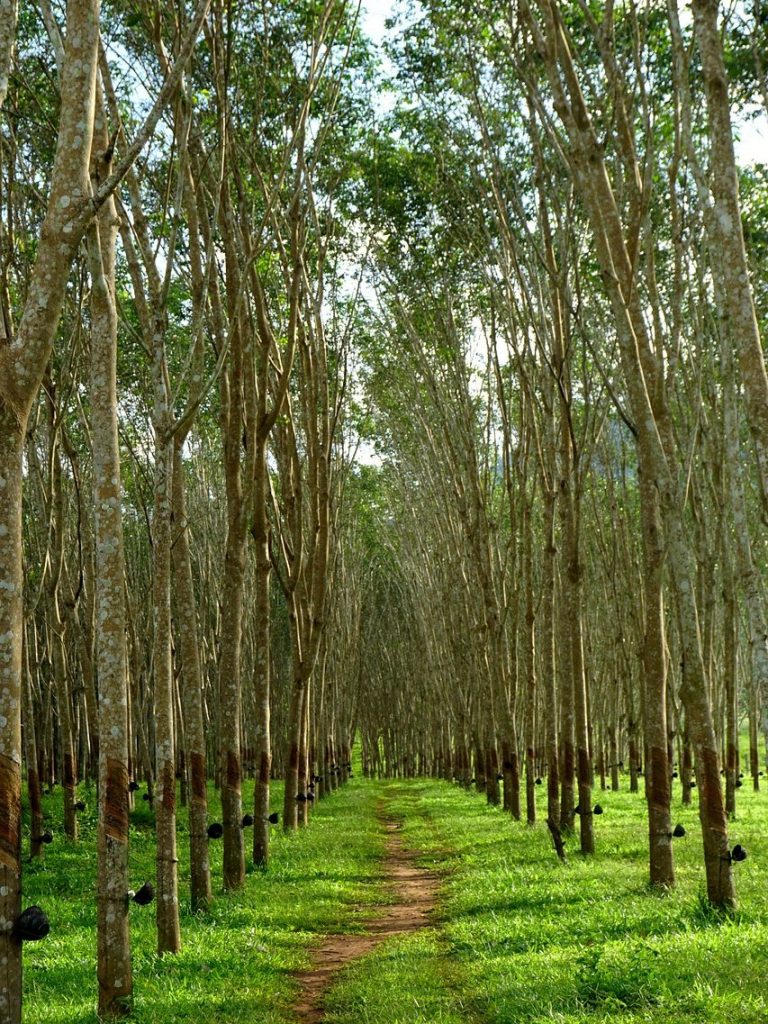
The total area of rubber plantation in Vietnam is about 941.000 ha (hectares) in which 476.258 ha (50,6%) are owned by 263.876 households (Tran, 2020). Almost 90 % of rubber smallholders hold less than 3 ha of rubber each (NSB, 2017). Total production of rubberwood produced by smallholders ranges at 1.3 millions m3, which accounted for 40 % of total national rubber timber production (NEPCON and Forest Trends, 2018). The market demand for rubberwood for both domestic and export has been rising in recent years,rubberwood has become an important source of raw materials for Vietnam’s wood industry and income for growers (NEPCON and Forest Trends, 2018).
According to VIFORES’s estimate, the amount of rubber wood supplied to the market is about 6-14% of the total volume of timber planted in domestic forests in the period 2016 – 2020 (Tran, 2020). The export turnover of rubber wood industry accounts for an increasing proportion in Vietnam’s wood industry, reaching 17.7% in 2015 with 1.22 billion USD and 22.4% in 2019 with 2.38 billion USD, making a significant contribution in the export growth of the country’s timber industry (Tran, 2020). The annual harvest of rubberwood ranges at 3 million m3 and is projected to reach 8 million m3 by 2040 (Tran, 2016).
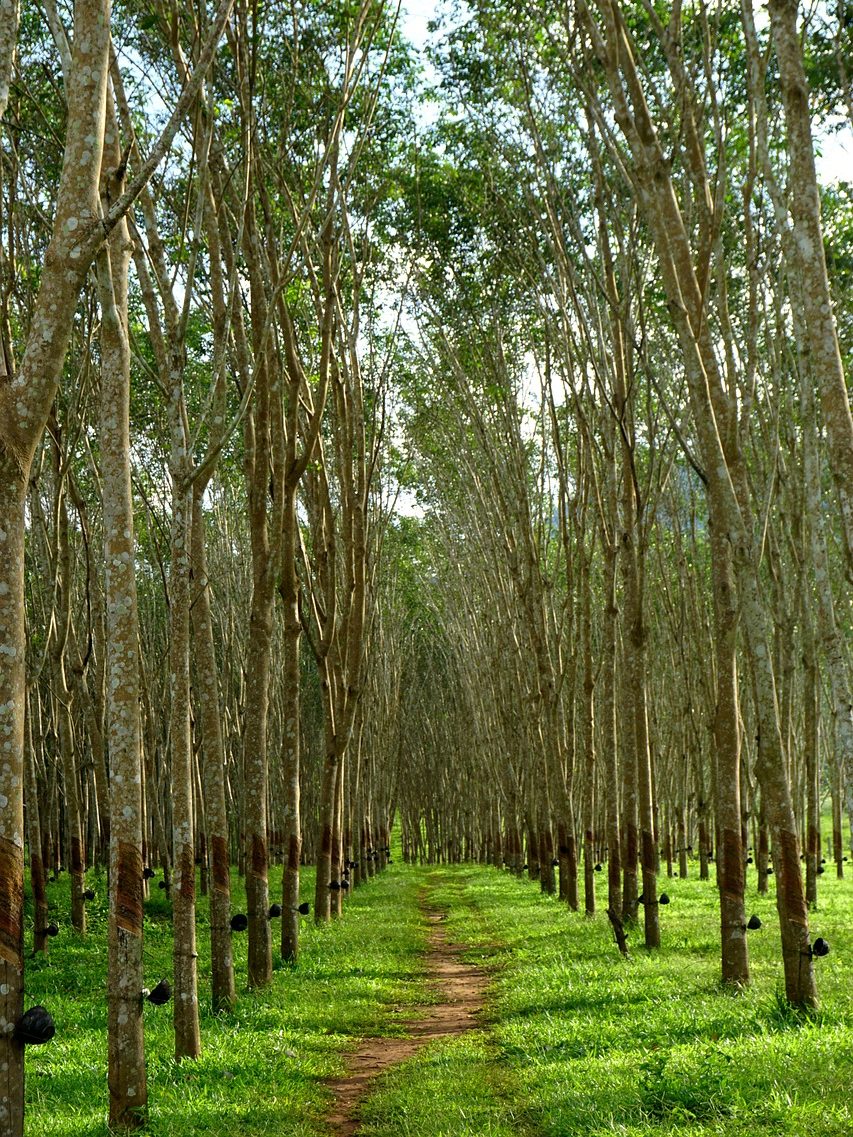
The signed VPA/FLEGT Agreement considered rubberwood as an important source of raw materials. Therefore, the agreements laid out legality requirements for rubberwood in the legality definition and timber legality assurance system (NEPCON and Forest Trends, 2018). This review assesses the preparedness of smallholders of rubber plantations to the increased requirements for legality verification laid out by VPA/FLEGT Agreements.
Rubber is classified as a multi-purpose tree according to the Decision 2855/QĐ-BNN-KHCN. It implies that rubberwood could be regarded as a crop if it is cultivated on agricultural land. The major rubber plantation areas in Vietnam are located in the central highlands and the south-east, which together make up 26.4 % and 55.1 % of the nation’s total plantation area (IPSARD, 2017). Provinces with the largest number of rubber smallholders are Binh Phuoc, Binh Duong, Tay Ninh, Kon Tum, Binh Thuan and Gia Lai (NSB, 2017). Rubberwood is cut after 25-30 years of harvesting latex, when the latex production is no longer profitable (NEPCON and Forest Trends, 2018).
Access to policy
Between smallholders and other actors in the value chains, there is a lack of both horizontal and vertical coordination and collaboration. Smallholders do not generally coordinate efforts or work together. They lack access to market data regarding their goods. When selling wood, tree farmers do not confer with one another; instead, they compete to sell for higher prices. The price has been driven down by several dealers taking advantage of the competition and poor coordination (NEPCON and Forest Trends, 2018).
A recent study by NEPCON and Forestrends in 2018 indicates that there is a weak direct contact between smallholders and timber processing companies as a result of the high transaction costs borne by many smallholders and the lack of significant effort made by national and local governments to encourage the development of such ties. Through broad networks of traders who operate at different scales, tree producers and timber processors are connected to one another.
The high transaction costs are partly caused by the lack of representatives in the form of formal smallholder organizations and/or cooperatives to operate as a platform for information exchange, market access and coordination. The recently formed Farmer’s Union (VNFU) and Forest Owner Associations (VIFOREST) may fulfill the aforementioned roles. However, the majority of farmers are not members of any organizations. Therefore, smallholders are not included in the process of developing and implementing policy due to the lack of representation (NEPCON and Forest Trends, 2018).
References
Trần Thị Thúy Hoa (2020). Đánh giá Quốc gia về các nhà sản xuất và nhà máy chế biến gỗ cao su ở Việt Nam. FAO-FLEGT Programme.
NEPCon and Forest Trends (2018) Diagnoses and Regulatory Assessment of small and micro forest enterprises in the Mekong Region.
IPSARD, 2017. Gỗ phân tán ở Việt Nam và tiềm năng phát triển trong khuôn khổ Hiệp định đối tác tự nguyện về tăng cường thực thi lâm nghiệp, quản trị rừng và thương mại gỗ (FLEGT VPA) với Châu Âu [scattered trees in Vietnam and their potentials in FLEGT VPA]. Institute of Policy and Strategy for Agriculture and Rural Development.
NSB, 2017. Data on rubber production 2017. National Statistics Bureau. Hanoi, Vietnam.
Trần Thị Thúy Hoa (2016). Nguồn cung gỗ cao su tại Việt Nam (rubberwood supply in Vietnam). Presentation made at the national workshop Wood material situation in 2017. Ho Chi Minh City, 14 December 2016.
