


 Tiếng Việt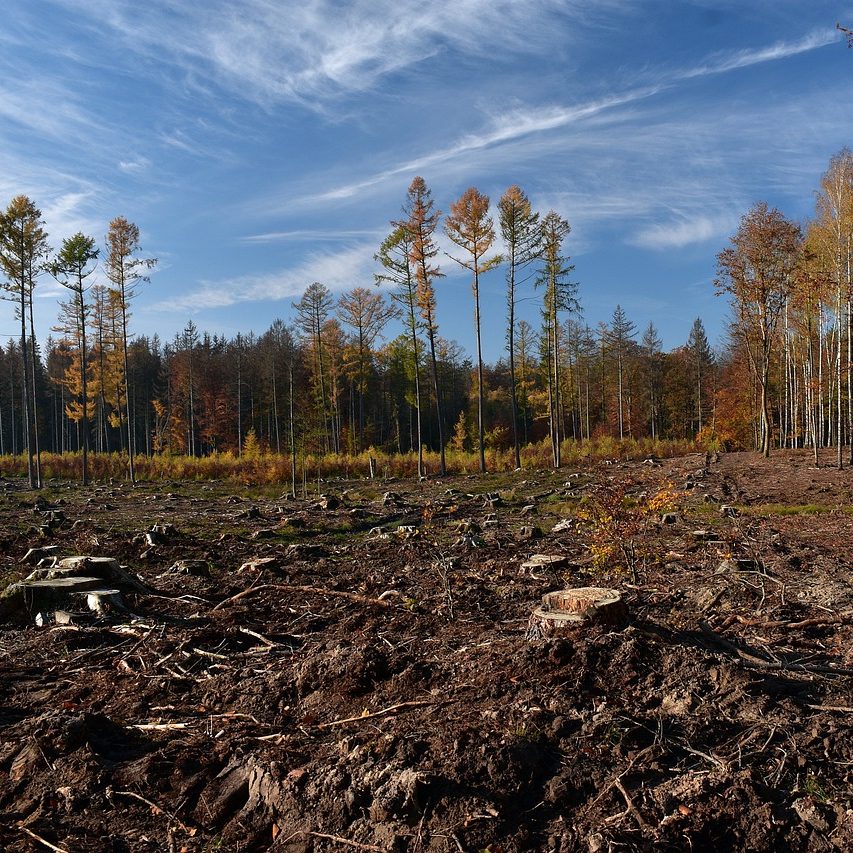
This post provides an update about the newly adopted EU regulations on Deforestation and an overview about its 7 major commodities and relevant products that are considered as having potential to cause deforestation and forest degradation.
Forests play a vital role in supporting thriving economies and societies. They regulate water supplies and provide essential resources for people. It is also home to pollinators on which food systems depend. Forests are also important as carbon sinks, helping to mitigate climate change. However, deforestation threatens these benefits and endangers our economies and societies.
One of the main causes of global warming and the decline in biodiversity is deforestation and forest degradation. About 23% of greenhouse gas emissions are caused by forestry, agriculture, and other land uses (European Commission, 2021).
Halting deforestation is essential for the world to achieve its socio-economic development, biodiversity and climate change mitigation goals. It is one of the best ways to mitigate climate change, as it will take many years for new forests (from afforestation and restoration) to sequester the same amount of carbon. However, the world is not on track to stop deforestation by 2030 (UN-REDD, 2024).
The European Union’s consumption of timber, rubber, coffee, cattle, palm oil, soy beans, and cocoa contributes to global deforestation and forest degradation. The EU aims to combat this by excluding commodities and goods associated with deforestation from entering the EU market (European Commission, 2021).
“We must protect biodiversity and fight climate change not only in the EU, but globally, and our consumption should not contribute to global deforestation which is a major cause of biodiversity loss and greenhouse gas emissions.Thus we present the most ambitious legislative measure ever put forward by any country anywhere in the world to curb deforestation and forest degradation and to help us tackle the twin crises of global warming and biodiversity loss.” (Virginijus Sinkevičius, Commissioner for the Environment, Oceans and Fisheries).
The EU Deforestation regulation answers citizens’ calls to minimize the European contribution to deforestation and to promote sustainable consumption (Frans Timmermans, Executive Vice-President for the European Green Deal). In response to a public survey, more than 1.2 million Europeans expressed support for EU action to combat deforestation and forest degradation (European Commission, 2021).
What is the EU Deforestation-free Regulation?
The EU has recently approved the EU Deforestation Regulation (EU) No 2023/1115 aimed to lessen the effects of the EU on global deforestation and forest degradation, which mandates seven commodities (wood, coffee, rubber, cattle, soy beans, cocoa, and palm oil) and relevant products made from them to be free from deforestation to enter the EU market or be exported from it. Relevant goods linked to the above mentioned commodities must also be produced in conformity with applicable local legislation and be covered by a due diligence declaration. The regulation committed to the following commitments:
- Guarantee to EU citizens that the listed products they buy, use and consume do not contribute to global deforestation and forest degradation.
- Reduce carbon emissions to the atmosphere due to EU consumption and production of the relevant commodities by at least 32 million metric tons a year. This would save at least €3.2 billion annually and enhance the contribution of forests to tackle climate change.
- Address illegal deforestation and forest degradation, as well as any deforestation due to agricultural expansion caused by production of the commodities.
Major commodities considered to having the potential to contribute to deforestation and forest degradation and covered by the EUDR are:
- Timber
- Coffee
- Rubber
- Soy beans
- Palm oil
- Cattle
- Cocoa
Relevant products considered as potential drivers of deforestation and forest degradation are products that contain, have been fed with or have been made using relevant commodities mentioned above.
List of relevant products considered as potential drivers of deforestation
| Relevant commodity | Relevant products |
|---|---|
| Cattle | 0102 21, 0102 29 Live cattle ex 0201 Meat of cattle, fresh or chilled ex 0202 Meat of cattle, frozen ex 0206 10 Edible offal of cattle, fresh or chilled ex 0206 22 Edible cattle livers, frozen ex 0206 29 Edible cattle offal (excluding tongues and livers), frozen ex 1602 50 Other prepared or preserved meat, meat offal, blood, of cattle ex 4101 Raw hides and skins of cattle (fresh, or salted, dried, limed, pickled or otherwise preserved, but not tanned, parchment-dressed or further prepared), whether or not dehaired or split ex 4104 Tanned or crust hides and skins of cattle, without hair on, whether or not split, but not further prepared ex 4107 Leather of cattle, further prepared after tanning or crusting, including parchment- dressed leather, without hair on, whether or not split, other than leather of heading 4114 |
| Cocoa | 1801 Cocoa beans, whole or broken, raw or roasted 1802 Cocoa shells, husks, skins and other cocoa waste 1803 Cocoa paste, whether or not defatted 1804 Cocoa butter, fat and oil 1805 Cocoa powder, not containing added sugar or other sweetening matter 1806 Chocolate and other food preparations containing cocoa |
| Coffee | 0901 Coffee, whether or not roasted or decaffeinated; coffee husks and skins; coffee substitutes containing coffee in any proportion |
| Soya | 1201 Soya beans, whether or not broken 1208 10 Soya bean flour and meal 1507 Soya-bean oil and its fractions, whether or not refined, but not chemically modified 2304 Oilcake and other solid residues, whether or not ground or in the form of pellets, resulting from the extraction of soya-bean oil |
| Oil palm | 1207 10 Palm nuts and kernels 1511 Palm oil and its fractions, whether or not refined, but not chemically modified 1513 21 Crude palm kernel and babassu oil and fractions thereof, whether or not refined, but not chemically modified 1513 29 Palm kernel and babassu oil and their fractions, whether or not refined, but not chemically modified (excluding crude oil) 2306 60 Oilcake and other solid residues of palm nuts or kernels, whether or not ground or in the form of pellets, resulting from the extraction of palm nut or kernel fats or oils ex 2905 45 Glycerol, with a purity of 95 % or more (calculated on the weight of the dry product) 2915 70 Palmitic acid, stearic acid, their salts and esters 2915 90 Saturated acyclic monocarboxylic acids, their anhydrides, halides, peroxides and peroxyacids; their halogenated, sulphonated, nitrated or nitrosated derivatives (excluding formic acid, acetic acid, mono-, di- or trichloroacetic acids, propionic acid, butanoic acids, pentanoic acids, palmitic acid, stearic acid, their salts and esters, and acetic anhydride) 3823 11 Stearic acid, industrial 3823 12 Oleic acid, industrial 3823 19 Industrial monocarboxylic fatty acids; acid oils from refining (excluding stearic acid, oleic acid and tall oil fatty acids) 3823 70 Industrial fatty alcohols |
| Rubber | 4001 Natural rubber, balata, gutta-percha, guayule, chicle and similar natural gums, in primary forms or in plates, sheets or strip ex 4005 Compounded rubber, unvulcanised, in primary forms or in plates, sheets or strip ex 4006 Unvulcanised rubber in other forms (e.g. rods, tubes and profile shapes) and articles (e.g. discs and rings) ex 4007 Vulcanised rubber thread and cord ex 4008 Plates, sheets, strips, rods and profile shapes, of vulcanised rubber other than hard rubber ex 4010 Conveyer or transmission belts or belting, of vulcanised rubber ex 4011 New pneumatic tyres, of rubber ex 4012 Retreaded or used pneumatic tyres of rubber; solid or cushion tyres, tyre treads and tyre flaps, of rubber ex 4013 Inner tubes, of rubber ex 4015 Articles of apparel and clothing accessories (including gloves, mittens and mitts), for all purposes, of vulcanised rubber other than hard rubber ex 4016 Other articles of vulcanised rubber other than hard rubber, not elsewhere specified in chapter 40 ex 4017 Hard rubber (e.g. ebonite) in all forms including waste and scrap; articles of hard rubber |
| Wood | 4401 Fuel wood, in logs, in billets, in twigs, in faggots or in similar forms; wood in chips or particles; sawdust and wood waste and scrap, whether or not agglomerated in logs, briquettes, pellets or similar forms 4402 Wood charcoal (including shell or nut charcoal), whether or not agglomerated 4403 Wood in the rough, whether or not stripped of bark or sapwood, or roughly squared 4404 Hoopwood; split poles; piles, pickets and stakes of wood, pointed but not sawn lengthwise; wooden sticks, roughly trimmed but not turned, bent or otherwise worked, suitable for the manufacture of walking sticks, umbrellas, tool handles or the like; chipwood and the like 4405 Wood wool; wood flour 4406 Railway or tramway sleepers (cross-ties) of wood 4407 Wood sawn or chipped lengthwise, sliced or peeled, whether or not planed, sanded or end-jointed, of a thickness exceeding 6 mm 4408 Sheets for veneering (including those obtained by slicing laminated wood), for plywood or for other similar laminated wood and other wood, sawn lengthwise, sliced or peeled, whether or not planed, sanded, spliced or end-jointed, of a thickness not exceeding 6 mm 4409 Wood (including strips and friezes for parquet flooring, not assembled) continuously shaped (tongued, grooved, rebated, chamfered, V-jointed, beaded, moulded, rounded or the like) along any of its edges, ends or faces, whether or not planed, sanded or end-jointed 4410 Particle board, oriented strand board (OSB) and similar board (for example, waferboard) of wood or other ligneous materials, whether or not agglomerated with resins or other organic binding substances 4411 Fibreboard of wood or other ligneous materials, whether or not bonded with resins or other organic substances 4412 Plywood, veneered panels and similar laminated wood 4413 Densified wood, in blocks, plates, strips or profile shapes 4414 Wooden frames for paintings, photographs, mirrors or similar objects 4415 Packing cases, boxes, crates, drums and similar packings, of wood; cable-drums of wood; pallets, box pallets and other load boards, of wood; pallet collars of wood (not including packing material used exclusively as packing material to support, protect or carry another product placed on the market) 4416 Casks, barrels, vats, tubs and other coopers’ products and parts thereof, of wood, including staves 4417 Tools, tool bodies, tool handles, broom or brush bodies and handles, of wood; boot or shoe lasts and trees, of wood 4418 Builders’ joinery and carpentry of wood, including cellular wood panels, assembled flooring panels, shingles and shakes 4419 Tableware and kitchenware, of wood 4420 Wood marquetry and inlaid wood; caskets and cases for jewellery or cutlery, and similar articles, of wood; statuettes and other ornaments, of wood; wooden articles of furniture not falling in Chapter 94 4421 Other articles of wood Pulp and paper of Chapters 47 and 48 of the Combined Nomenclature, with the exception of bamboo-based and recovered (waste and scrap) products ex 49 Printed books, newspapers, pictures and other products of the printing industry, manuscripts, typescripts and plans, of paper ex 9401 Seats (other than those of heading 9402), whether or not convertible into beds, and parts thereof, of wood 9403 30, 9403 40, 9403 50, 9403 60 and 9403 91 Wooden furniture, and parts thereof 9406 10 Prefabricated buildings of wood |
